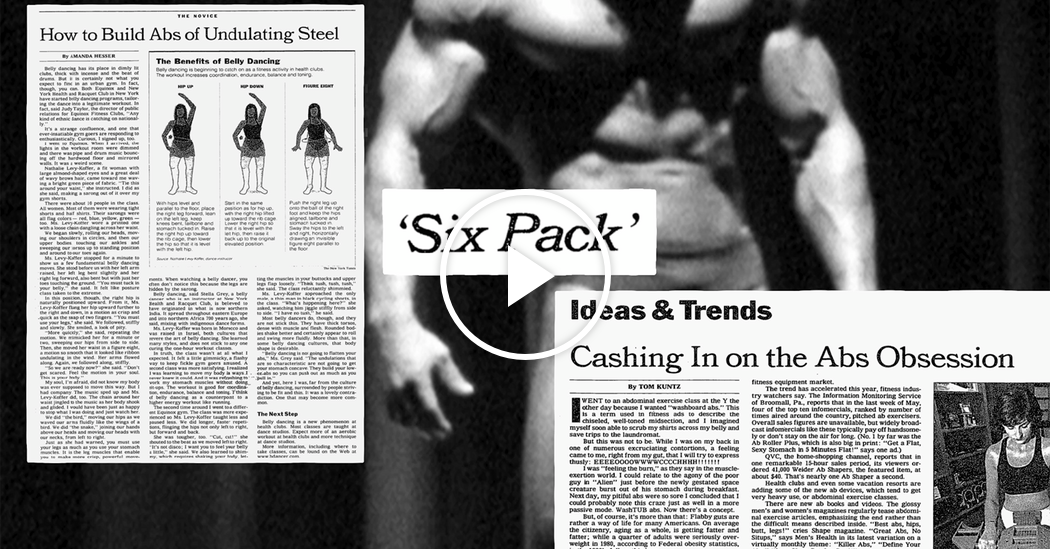
Since basically the beginning of time, humans have been lifting heavy objects to build muscle. The ancient Greeks lifted weights in the first gymnasiums, believing that a strong body supported a strong mind. And around the turn of the 20th century, strongmen and strongwomen became fixtures in circus acts across Europe and North America. But for most of history, the average person just didn’t lift weights. And yet today in the U.S., weight lifting is everywhere, from your gym to advertisements to your social feeds. About a third of Americans strength train regularly. That percentage has been steadily rising. So how did we get from here to here? You can’t talk about the rise of weight lifting in America without talking about Muscle Beach, which became the home for lifting aficionados in the 1930s and 1940s. There were key figures like Pudgy Stockton and Jack LaLanne, who hosted one of the country’s first fitness T.V. shows. “Everything is looking better.” When LaLanne first went on the air, weight lifting wasn’t just seen as fringe, it held all sorts of negative stereotypes. Most medical authorities thought that lifting heavy weights was detrimental to your health. “You know, weight lifting doesn’t actually make you any healthier. And most people are surprised to learn that it doesn’t add to their physical fitness.” And athletic coaches forbade their athletes from pumping iron, believing that it could make them muscle-bound or limit their movements. Men who spend hours in the gym working on their physiques were often seen as vain or dimwitted or brutish, and women who worked out were seen as deeply transgressive. The sexual orientation of both was often questioned. Then came Arnold Schwarzenegger. Historians say the then-young bodybuilder almost single-handedly helped to make big muscles aspirational through his charm and charisma. Throughout the ‘80s, he propelled more Americans than ever before into weight rooms. And yet, throughout the ‘80s, lifting was marketed mostly for aesthetic reasons. For men, it offered a path to becoming ripped. For women, it was a way to become toned. It was around this time that the term six-pack entered the vernacular. And even as weight lifting became more mainstream, much of the public remained skeptical of big muscles as headlines about steroid use and abuse tarnished its image. And then in 2000 came CrossFit, the hardcore strength training regimen, which exploded throughout the aughts and 2010s. CrossFit introduced hundreds of thousands of Americans to the idea of strength for strength’s sake. This included women, which marked a huge shift. The CrossFit Games launched in 2007, and around the same time, other fitness franchises entered the national scene like Barry’s Bootcamp and Orangetheory. And while these weren’t hardcore lifting gyms, they did offer strength training as part of their classes, which helped to further normalize it and bring lifting to even more people. One thing that I think is really notable is that for women, there started to be pushback against the uber-thin body ideals of the 1990s and more of a push for strong over skinny. Meanwhile, for the first time, major health organizations started recommending strength training for health and well-being as a growing body of research backed up these benefits. In the last five years, we’ve seen a tipping point. More and more research has suggested that lifting can improve so many aspects of health and well-being for men and women, and social media influencers are drilling this point home. “We must learn to lift heavy.” “Muscle has been called the organ of longevity, the organ of health.” “Maintaining or improving the strength of our muscles is very important across the entire life span.” Today, weight lifting is marketed as essential to longevity, and this idea of health span. Women who were taught to fear bulk growing up are now embracing lifting. And research backs up much of this hype. Lifting has cognitive and mental health benefits. It helps with disease prevention and just quality of life. “I work out because I think it’s great for my mental health.” “For aesthetics.” “It helps emotional regulation.” “Bone density.” “There’s endorphins.” “For me, weight lifting has become more about longevity.” I’ve been covering fitness for nearly a decade, and weight lifting is having a bigger moment now than I have ever seen in recent history. To me, I think what’s most significant is that our ideas about who weight lifting is for, who it can benefit, and the motivations for why we’re lifting have expanded so dramatically in recent years.
How Weight Lifting Took Over America